There is a particular kind of HVAC installation I keep seeing around New York.
You probably know the one.
The equipment turns on.
Cold air comes out in the summer.
Heat comes out in the winter.
The customer is happy.
Invoice gets paid.
Everybody leaves.
And almost nobody asks the most important question:
What does the installation actually look like upstairs?
Because the customer usually is not climbing onto the roof.
The building owner probably is not climbing onto the roof.
The restaurant manager definitely does not want to climb onto the roof.
So as long as the space downstairs gets comfortable, whatever happened upstairs becomes somebody else's problem.
Until another technician eventually gets called.
That is how you end up with installations like the one in these photos.
And two things jumped out at me immediately.
The condensers are facing each other.
And the refrigerant lines look like somebody gave up halfway through the job.
Both problems tell the same story.
The equipment was installed to run.
It was not installed to be right.
Let's Start With the Condensers
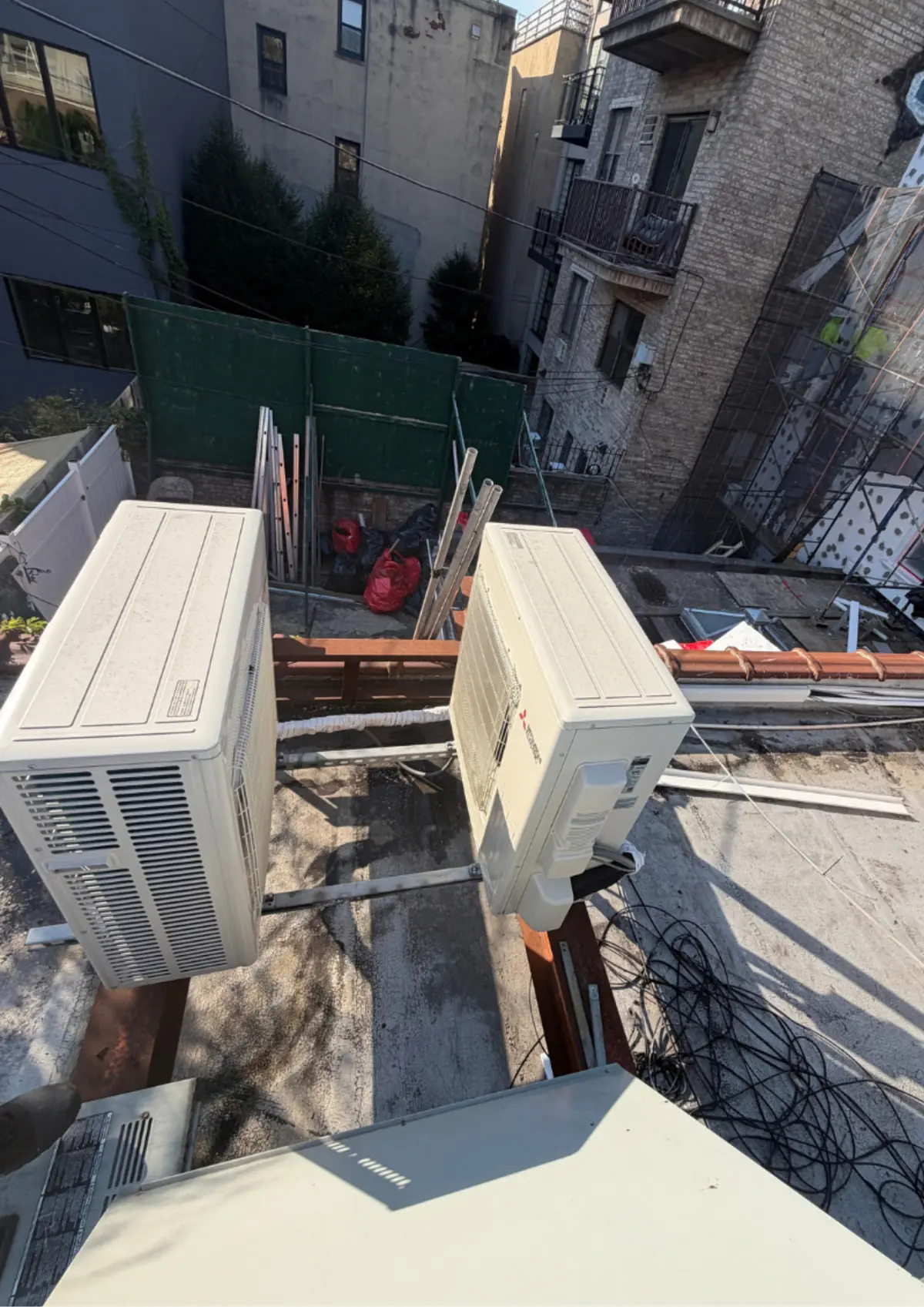
Look at the outdoor units.
These are side-discharge condensers.
That fan is not decorative.
Its job is to move air across the outdoor coil and discharge the heat the refrigeration system just removed from the conditioned space.
That hot discharge air needs somewhere to go.
Instead, these units are positioned so that one condenser can discharge toward another condenser sitting directly across from it.
Think about what we are asking the equipment to do.
Unit A is trying to reject heat.
It blows hot air out.
Unit B is sitting in the path of that discharge air.
Now Unit B is trying to reject its own heat while potentially pulling in air that has already been heated by Unit A.
And depending on which units are operating, Unit A can receive the same treatment back.
That is not a sophisticated design problem.
That is a layout problem.
And frankly, it is a high-level rookie mistake.
Before you start thinking about pressures, subcooling, superheat, inverter logic or anything else, the outdoor unit still has to breathe.
If the condenser cannot get proper outdoor air and cannot get rid of its discharge air properly, you have already created conditions that make the equipment work harder than necessary.
Higher entering-air temperature at the outdoor coil means the refrigeration system has a harder job rejecting heat.
Performance can suffer.
Efficiency can suffer.
Operating pressures can increase.
Capacity can suffer under difficult conditions.
And the technician who gets called later may spend time diagnosing a system that was fighting the installation from the day it was turned on.
That is what makes mistakes like this frustrating.
The equipment may still run.
That is the trap.
Running Is Not Proof of a Good Installation
HVAC equipment is surprisingly forgiving.
Manufacturers build equipment to operate under a range of conditions.
That does not mean every condition we create for it is acceptable.
A system can cool while being installed badly.
A system can heat while being installed badly.
A system can run for months while being installed badly.
Then the first serious heat wave arrives.
Or the coils get a little dirty.
Or another condenser beside it starts operating at the same time.
Or ambient temperature climbs.
Suddenly the margin disappears.
Now everybody wants to know why the unit cannot keep up.
Sometimes the answer did not begin with the compressor.
It began with where somebody decided to put the condenser.
This Should Have Been Solved Before the First Hole Was Drilled
Good installation starts before the equipment goes down.
Where is the unit going?
Where is the discharge air going?
Where will replacement air come from?
What are the manufacturer's required clearances?
Can another condenser interfere with airflow?
Can a technician remove the service panel?
Can somebody replace the fan motor later?
Can you reach the service valves?
Can the roofer work around it?
Where will the lines run?
Where will the electrical run?
Where will the disconnect go?
These are layout questions.
You answer them before installation.
Not after everything has already been mounted and somebody realizes the equipment is staring directly into another condenser.
Sometimes the most valuable HVAC tool on the job is not in the tool bag.
It is the ability to stop for five minutes and think about where everything should go.
Then Look at the Line Sets
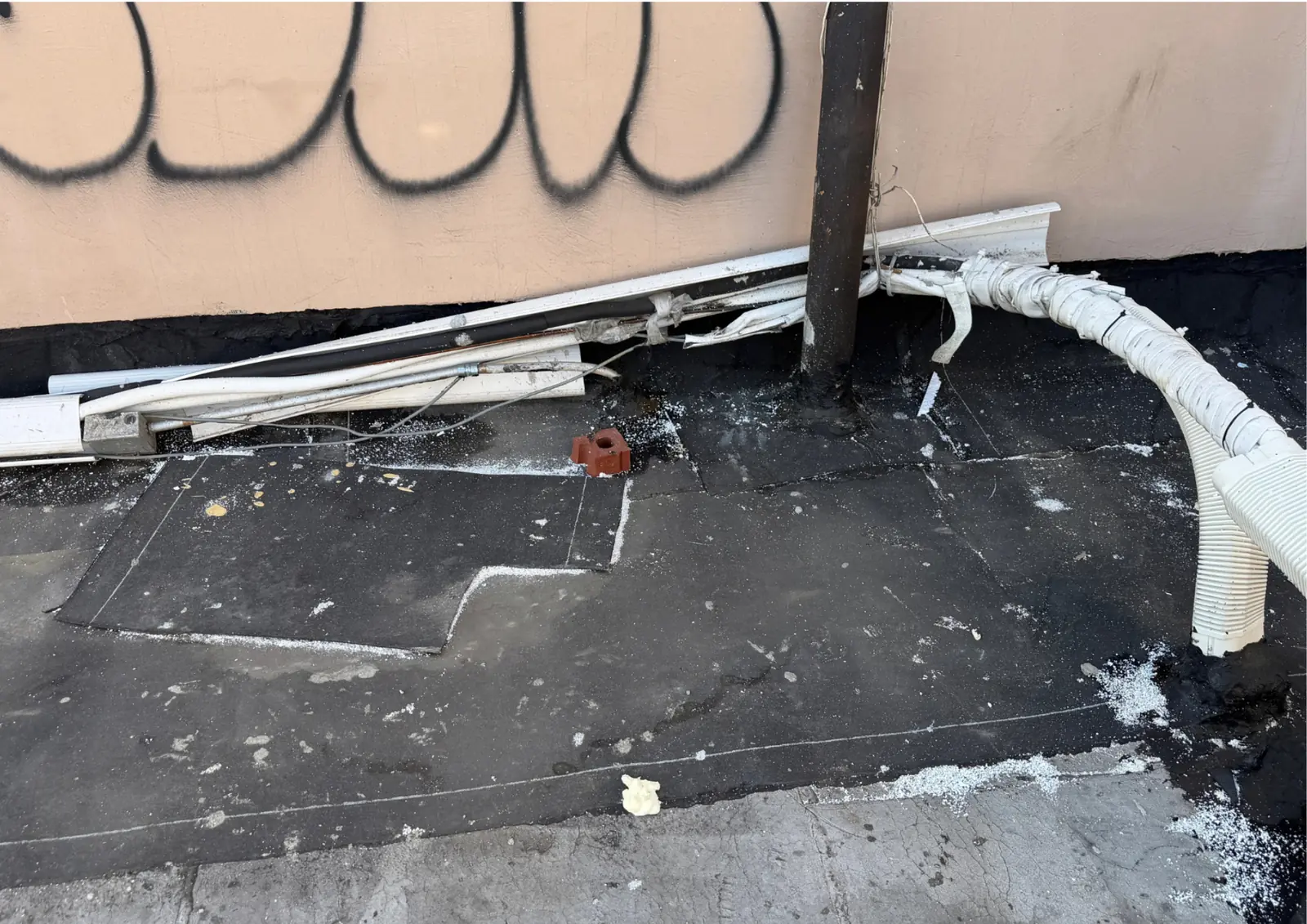
The condenser layout caught my attention first.
Then I looked down.
That might actually be worse.
Refrigerant lines running across the roof.
Damaged and open line-hide.
Insulation exposed.
Sections wrapped and patched.
Piping crossing around structural steel.
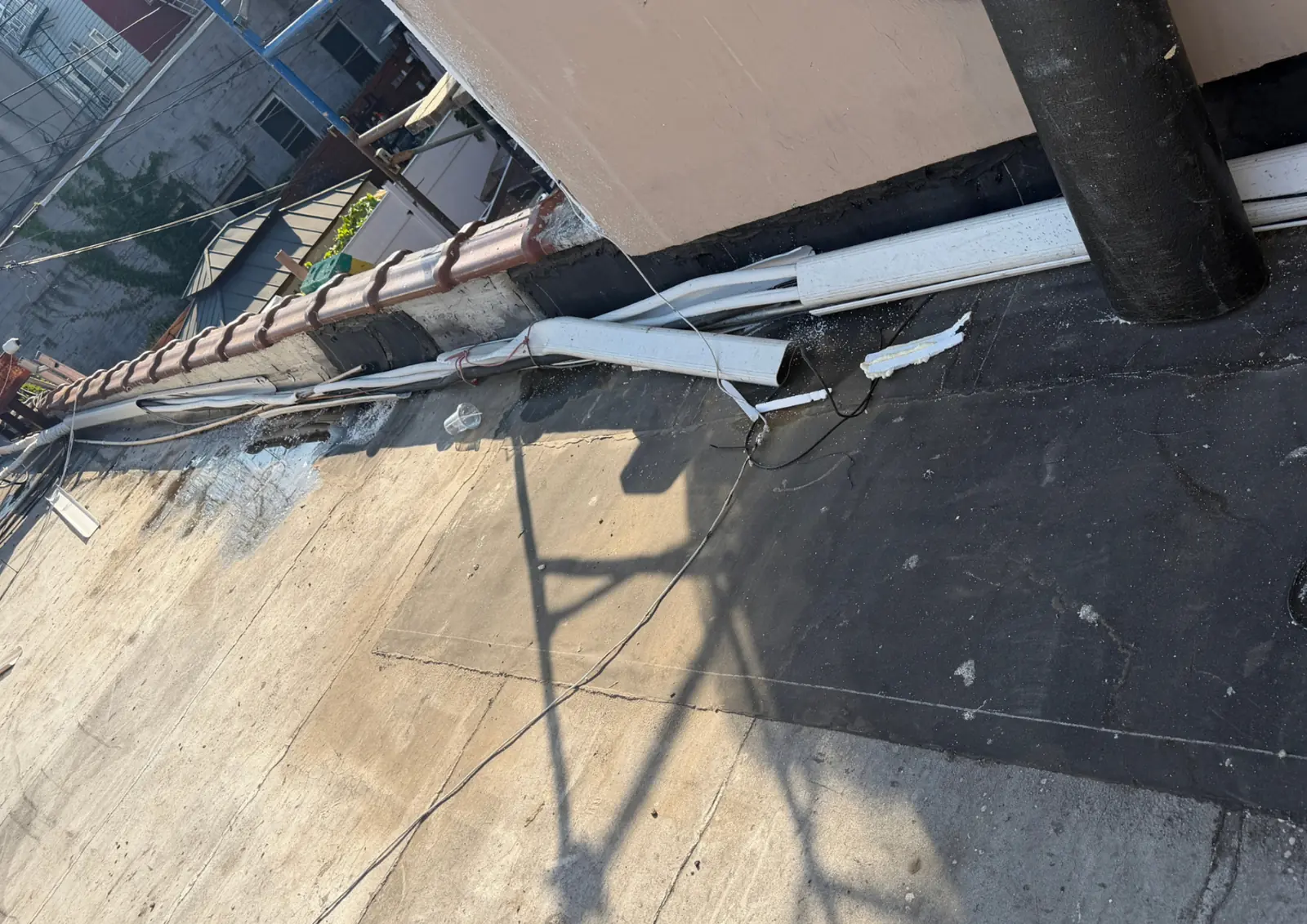
Wiring and lines laying wherever they could fit.
Roof penetrations that look more like somebody solved them with whatever material was available than a planned mechanical installation.
It does not look finished.
It looks abandoned.
And yet the equipment is operating.
Again, that is the problem.
The customer downstairs probably has no idea.
They see a thermostat.
They hear the fan.
They feel cold air.
Meanwhile, the installation that is supposed to serve them for years is sitting on the roof exposed to sun, rain, snow, wind, vibration, foot traffic and every future person who has to work around it.
Refrigerant Piping Is Part of the Installation
Sometimes line sets are treated like the annoying thing connecting the two important pieces of equipment.
They are not.
They are part of the refrigeration system.
That copper deserves proper routing.
Proper support.
Proper insulation.
Proper protection.
Proper penetrations.
And enough thought that the next technician can actually trace where the lines go.
Outdoor insulation takes abuse.
UV exposure destroys materials.
Water gets into damaged insulation.
Lines vibrate.
Copper rubbing against steel can become a long-term problem.
Loose wiring gets snagged.
Covers disappear.
Someone steps on something.
Roof work happens around the system.
Years pass.
What looked like a shortcut on installation day becomes somebody else's service call later.
That is why good installers do not only ask:
Will this work today?
They ask:
What will this look like five years from now?
I Honestly Wonder Who Installed This
Looking at the routing and supports, I joked that maybe a carpenter installed it.
I obviously cannot prove that.
And this is not about insulting carpenters.
A good carpenter understands their trade better than I ever will.
The point is that the installation looks like somebody understood how to physically attach equipment to a building but did not fully think through how HVAC equipment has to operate.
There is a difference between:
I can mount this here.
and
This should be mounted here.
There is a difference between:
I can get these pipes from Point A to Point B.
and
This is how refrigerant piping should be routed, supported and protected.
Trades overlap all the time.
That is normal.
But each trade has principles you do not see until you understand the work.
The equipment does not care that everything is securely screwed down if it cannot breathe properly.
Why I Keep Seeing This in New York
This is not the first rooftop installation like this that I have seen.
That is what bothers me.
Across New York, especially on restaurants, small commercial spaces, multifamily buildings and tight city properties, roof space is valuable and often difficult.
Everybody is fighting for room.
HVAC equipment.
Exhaust fans.
Ductwork.
Plumbing vents.
Electrical.
Fire escapes.
Telecommunications.
Roof access.
Structural steel.
Sometimes you genuinely have to get creative.
But difficult conditions do not excuse abandoning basic mechanical principles.
What I think makes the problem worse is simple:
Nobody is looking.
Most owners never see these rooftops.
If the contractor says the installation is complete and the dining room gets cold, what reason does the restaurant owner have to climb a ladder and inspect condenser airflow?
They hired us because they do not know HVAC.
That trust is supposed to mean something.
Out of Sight Cannot Mean Out of Standard
This is where craftsmanship matters.
Doing good work only when the customer can see it is not craftsmanship.
Anybody can make the visible thermostat look nice.
Anybody can wipe fingerprints off the indoor unit.
Anybody can make the invoice look professional.
The real test is the work behind the ceiling.
Inside the mechanical room.
Above the drop ceiling.
On the roof.
Places the customer may never see.
Because that is where your name really lives.
A customer should not have to understand condenser recirculation to receive a proper installation.
They should not have to know how refrigerant lines should be protected.
They should not have to inspect your supports.
That is why they hired someone who is supposed to know.
The Technician Who Comes Later Pays for It
There is another person affected by installations like this.
The next technician.
Maybe five years from now.
The original installer is long gone.
The unit is tripping.
The restaurant is hot.
The owner says:
“It has worked fine for years.”
Now the technician has to diagnose not only the equipment but the installation surrounding it.
Is the condenser recirculating hot discharge air?
Is the line insulation destroyed?
Has a pipe been rubbing against steel?
Which line belongs to which condenser?
Which electrical feed serves which unit?
Can the service panel even come off properly?
Was this unit always operating under these conditions?
Bad installation creates diagnostic noise.
And diagnostic noise costs time.
Owners Usually Find Out Too Late
The owner often discovers the quality of the original installation only when something stops working.
That is backwards.
Installation quality should not reveal itself through failure.
The work should be right from the beginning.
And owners should understand something too:
If you are paying somebody to install equipment on a part of your building you will rarely visit, take pictures.
Ask for documentation.
Ask where the units were installed.
Ask how they are being supported.
Ask how the piping was routed.
Ask whether manufacturer clearances were followed.
You do not need to become an HVAC technician.
You just need enough visibility to know what you paid for.
The Standard Cannot Be “It Blows Cold”
That is too low.
An HVAC installation should not be judged only by whether cold air comes out of the indoor unit on startup day.
The standard should include:
Does the equipment have proper airflow?
Can it reject heat?
Can it be serviced?
Are the refrigerant lines protected?
Is the wiring supported?
Are penetrations properly handled?
Can someone understand the installation later?
Was the manufacturer's installation guidance respected?
Will this installation still make sense years from now?
That is a professional installation.
The Roof Tells the Truth
Downstairs, everything may look perfect.
The thermostat says 72.
Customers are comfortable.
Nobody is complaining.
Then you climb onto the roof.
And suddenly you see the real quality of the job.
Condensers blowing into each other.
Lines exposed everywhere.
Covers falling apart.
Routing with no apparent plan.
Equipment squeezed wherever somebody could make it fit.
The roof tells you something the thermostat cannot.
It tells you whether somebody was thinking beyond startup day.
Because making equipment run is only part of our job.
Installing it so it can keep running is the other part.
And if the only standard we use is:
“It is blowing cold.”
then eventually somebody else is going to climb onto that roof and see what we hoped nobody would.